.webp)

The Hallesche Verkehrs-AG (HAVAG) operates trams and buses for Halle (Saale) and the Saalekreis district. A reliable supply of materials is no minor matter here — it is a prerequisite for transit operations. By bringing in mobile SAP processes with Ontego, HAVAG has fundamentally modernized its warehouse management: shorter processing times, greater transparency, and a team that today would no longer want to be without the digital way of working.
Every day, thousands of passengers use HAVAG's buses and trams. Behind the transit operations lies an extensive technical network: workshops for buses and trams, track construction, and power supply. All these areas are supplied with materials from the central warehouse as well as the Rosengarten external warehouse — reliably and efficiently — not least thanks to digital SAP processes.
Paper-Based Processes as the Starting Point
Until 2024, HAVAG's six-member warehouse team worked with a system of yellow A5-format inventory bin cards. Every goods receipt, every goods issue, every order number was entered by hand. Material withdrawals were handled viamaterial requisition slips: the requesting department brought the slip, the warehouse picked the items, filled out the bin cards, and later transferred everything manually into SAP — including twelve-digit cost object numbers, line item by line item. For a single material requisition slip with seven line items, the total effort added up to around 20 minutes.
The Rosengarten external warehouse, with nearly 1,000 SKUs, followed the same principle. Red demand cards signaled low stock levels and triggered manually coordinated stock transfers. Inventory data was always only as current as the most recently entered card — a typical challenge of paper-based warehouse systems.
Implementation: Step by Step Toward the Digital Solution
HAVAG had long been pursuing the goal of digitalizing its warehouse management. Together with the municipal IT service provider, those responsible organized a project for mobile SAP processes. The pilot phase with Ontego began in January 2024, followed by the go-live in July 2024.
Torsten Knorre, responsible for warehouse management at HAVAG, was involved in the implementation from the very beginning. Together with the IT consulting partner, the solution was first tested in the test system — with the advantage of being able to review and adjust configurations and workflows before going live. The team deliberately opted for a phased rollout: feature by feature was released, in order to arrive safely at the new processes.
"commsult had made the solution available as an online version at an early stage. This allowed us to run through and correct various test cases in advance — that worked really well."
Scanning Instead of Writing: The New Daily Workflow
.webp)
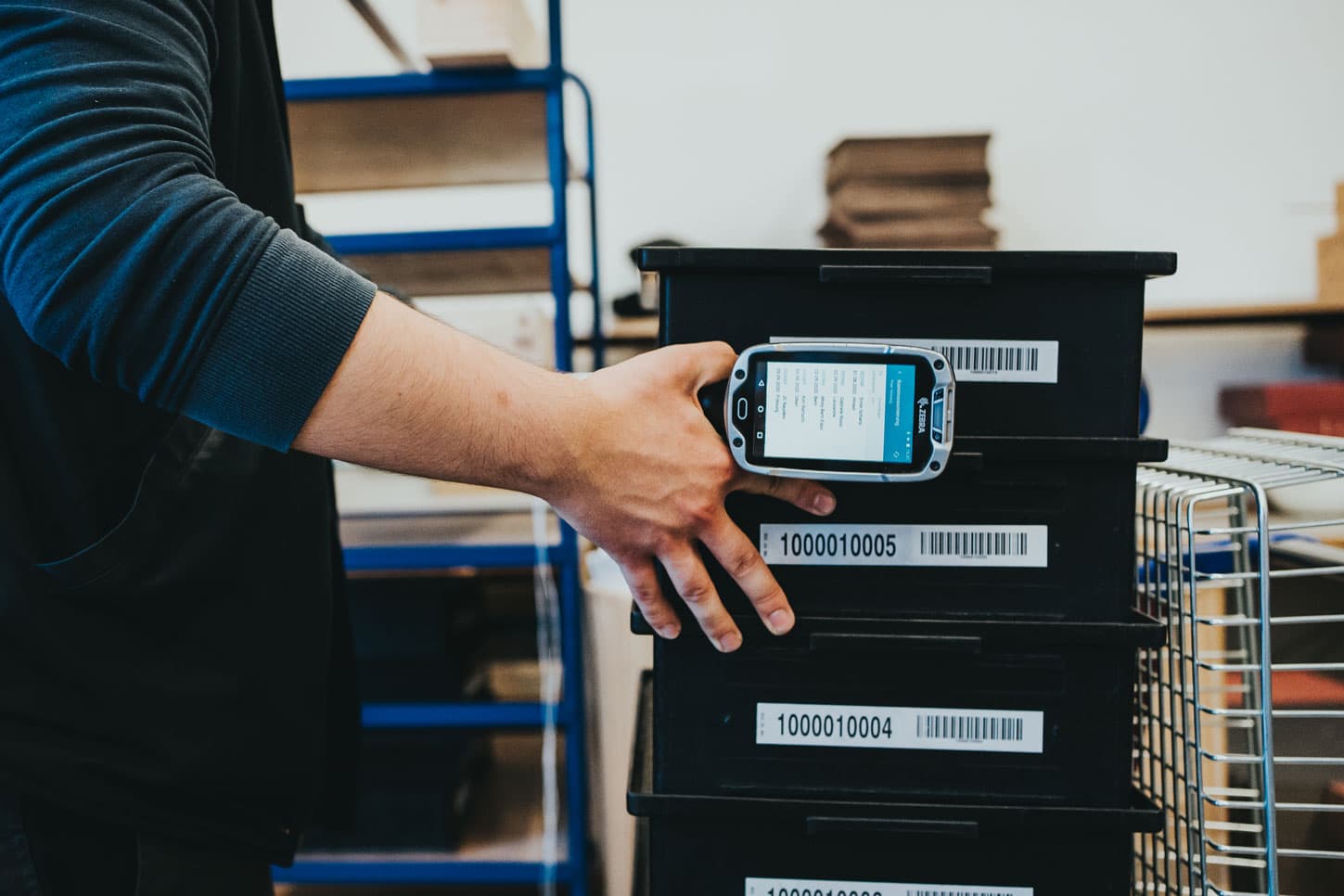
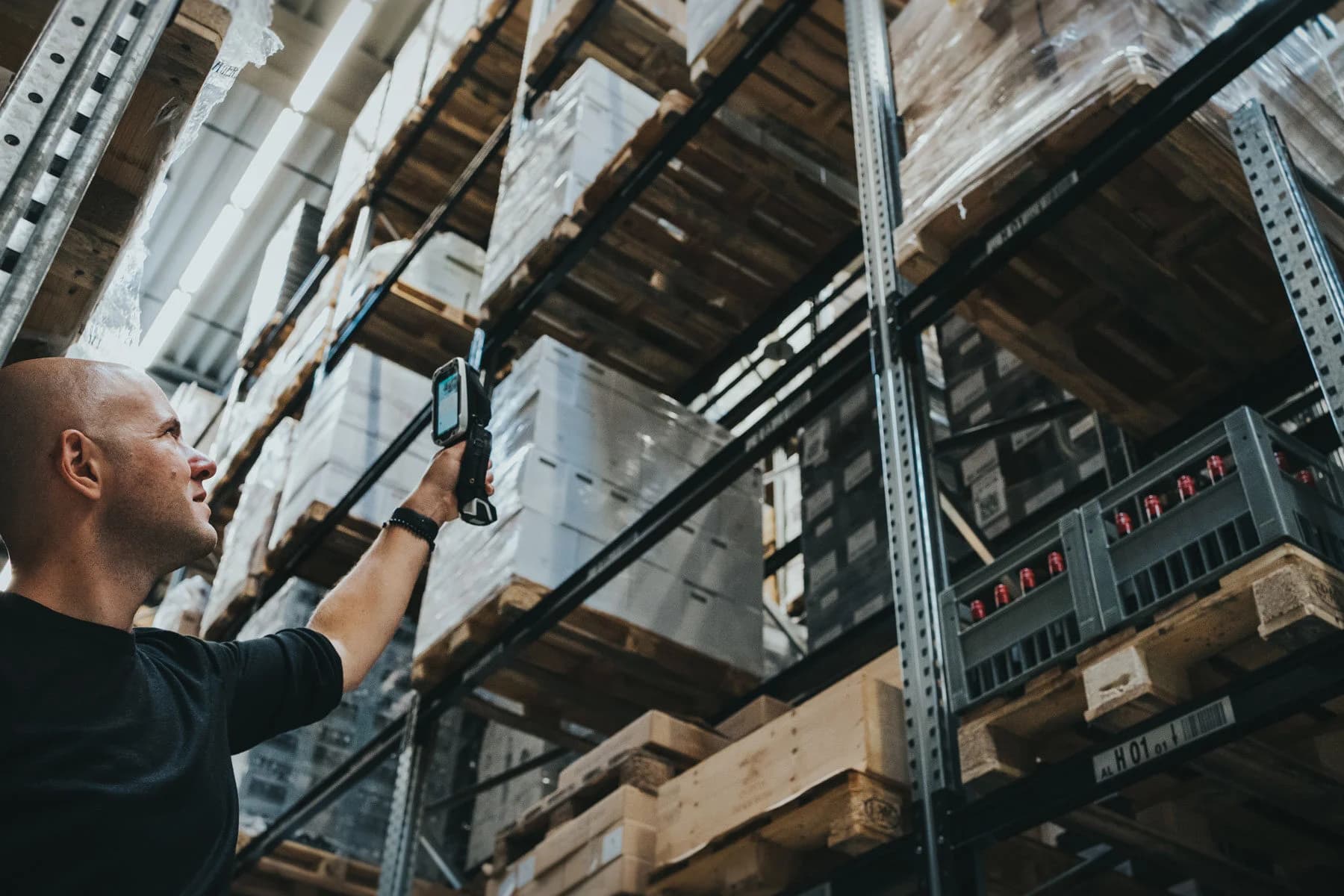
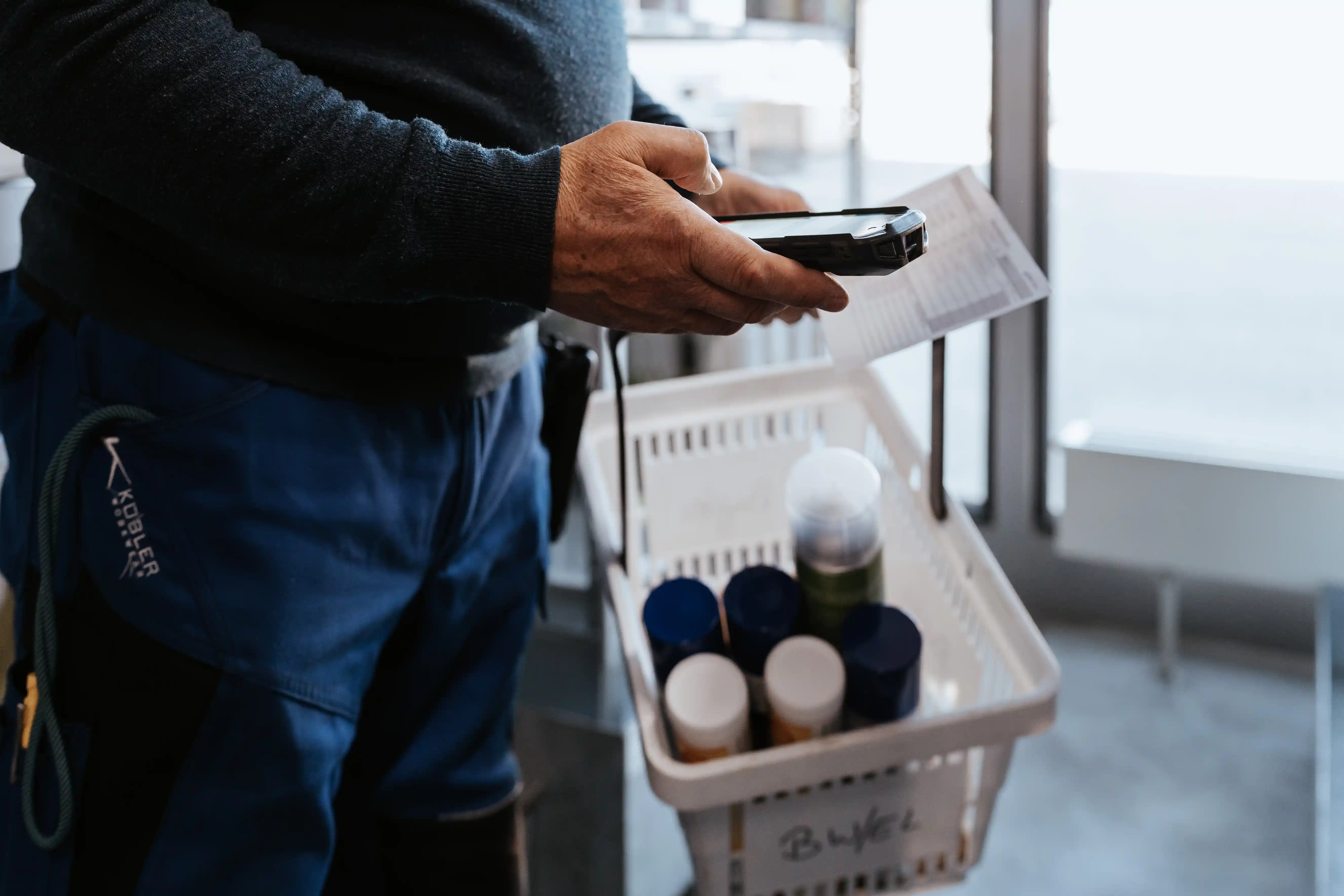
Today, material withdrawal takes place entirely on mobile devices. The employee goes to the shelf, scans the item barcode, enters the quantity and cost object — the transaction is sent directly to the Ontego control station, which serves as a reviewable intermediate buffer before the final SAP posting. For frequently used cost objects, the team has developed a clever in-house solution: laminated QR code labels that completely eliminate the tedious manual entry of twelve-digit numbers — an idea that came directly from the team.
Goods receipts have also become significantly more efficient. The employee photographs the delivery note directly with the scanner; the image is automatically attached to the corresponding SAP posting. What was previously a separate step — scanning at the PC, renaming, manual linking — is now fully integrated into the mobile workflow.
The Ontego Control Station: Flexibility for Complex Requirements
The Ontego control station is a distinctive feature in HAVAG's mobile SAP setup. It is a web-based application that mediates between the mobile data capture in the warehouse and the final posting in the SAP system, and provides additional desired application logic.
All transactions captured by employees with the scanner — goods receipts, goods issues, stock transfers — first land in the control station, where they are clearly listed, reviewed, and can be supplemented or corrected if necessary. Only after this review does the binding posting to SAP take place. The control station thereby creates a controlled intermediate layer that ensures both transparency and data quality.
For HAVAG, this architecture is particularly valuable because municipal enterprises must deal with situations that do not occur in industry in this way: if a vehicle is involved in an accident, the associated SAP cost object may not yet exist at the time of the material withdrawal. In the control station, the transaction can nevertheless be captured immediately — the final posting takes place as soon as the cost object has been created in SAP. The warehouse process continues without interruption.
In addition, HAVAG also maps its quality management through the control station. For safety-critical components such as wheel tires or brake calipers, several manufacturer certificates must be confirmed upon goods receipt. If a confirmation is missing, the control station automatically blocks the posting — a systemic safety mechanism that reliably enforces inspection requirements.
Stock transfers to the Rosengarten external warehouse are also managed via the control station: if an item falls below the defined reorder point, the control station automatically lists the affected items, the transfer order is created digitally, and appears directly on the scanner of the responsible employee.

Results Overview
The introduction of the mobile solution has an impact on several areas of warehouse management:
- Processing a material material requisition slip (e.g., 7 line items): reduced from around 20 minutes to approx. 5 minutes
- Stocktake at the external warehouse (approx. 960 SKUs): duration reduced from 1.5 days to around 4 hours
- Quality inspection of safety-critical parts: secured systemically via the control station
- Stock transfers to the external warehouse: triggered automatically when the reorder point is reached
- Cost objects for SAP objects not yet created: can be pre-captured
- Delivery note documentation: fully integrated into the mobile goods receipt process
User Adoption of the Mobile SAP Solution: The Team as the Driving Force
The digital mobile way of working around the SAP-managed materials management processes was well received by the team from the very beginning. Since all six colleagues were involved from the start, they quickly developed a confident feel for the new processes — and contributed their own ideas. The QR code labels for cost objects are one example of how the digital solution is independently further developed in day-to-day use.
.webp)
"We are all enthusiastic. I think my colleagues would complain if I said we were switching back to the old way."
Next Steps: Digital Transformation Sets the Example
Digitalization at HAVAG is not stopping here. Other departments — including maintenance — are already watching developments in warehouse management closely. Torsten Knorre is already exploring options to connect Ontego with additional systems, for example a planned computer-aided workshop management system. And the annual stocktake in the central warehouse — for the first time conducted entirely with scanner technology — is just around the corner as the next milestone.
Conclusion
HAVAG demonstrates how municipal transit operators can pragmatically implement mobile SAP processes in materials management: step by step, with clear responsibilities, and a team that experiences digital transformation as a genuine improvement. The control station as an intelligent intermediate layer, the direct SAP integration, and the mobile scan workflow create transparency, measurably save time, and make warehouse operations — including for external auditors — fully traceable.

Know-how
Speak to an expert in mobile data capture in SAP logistics.