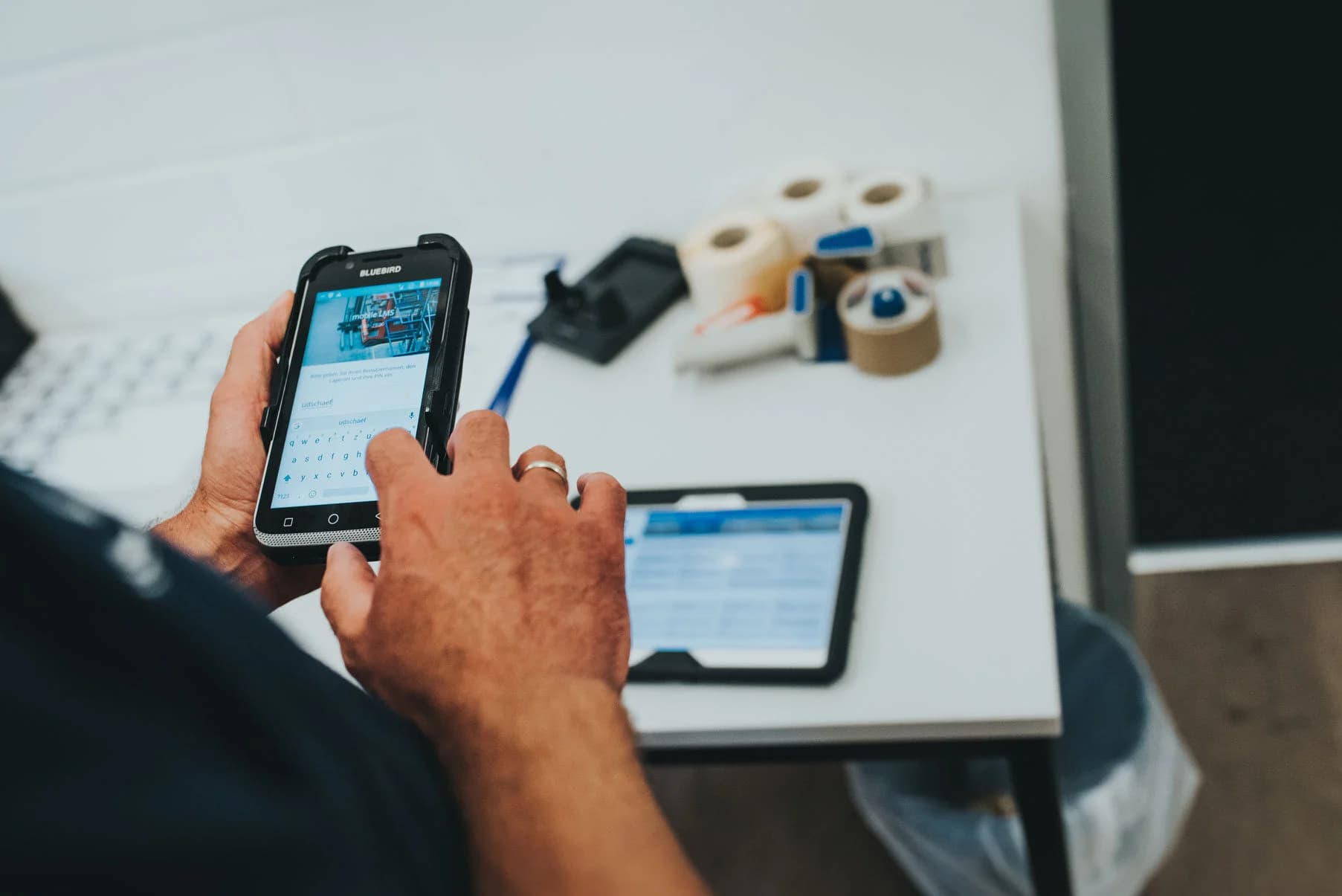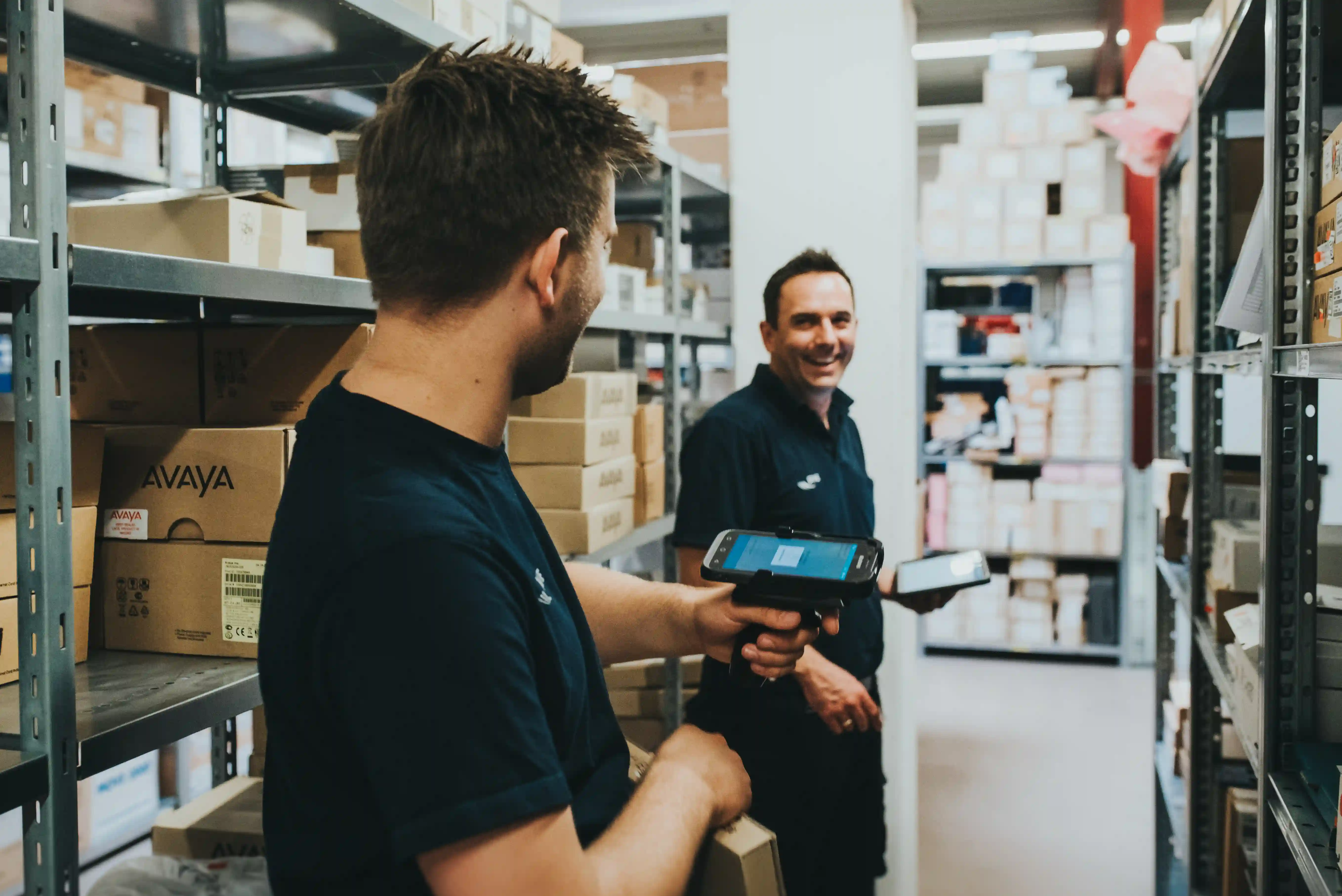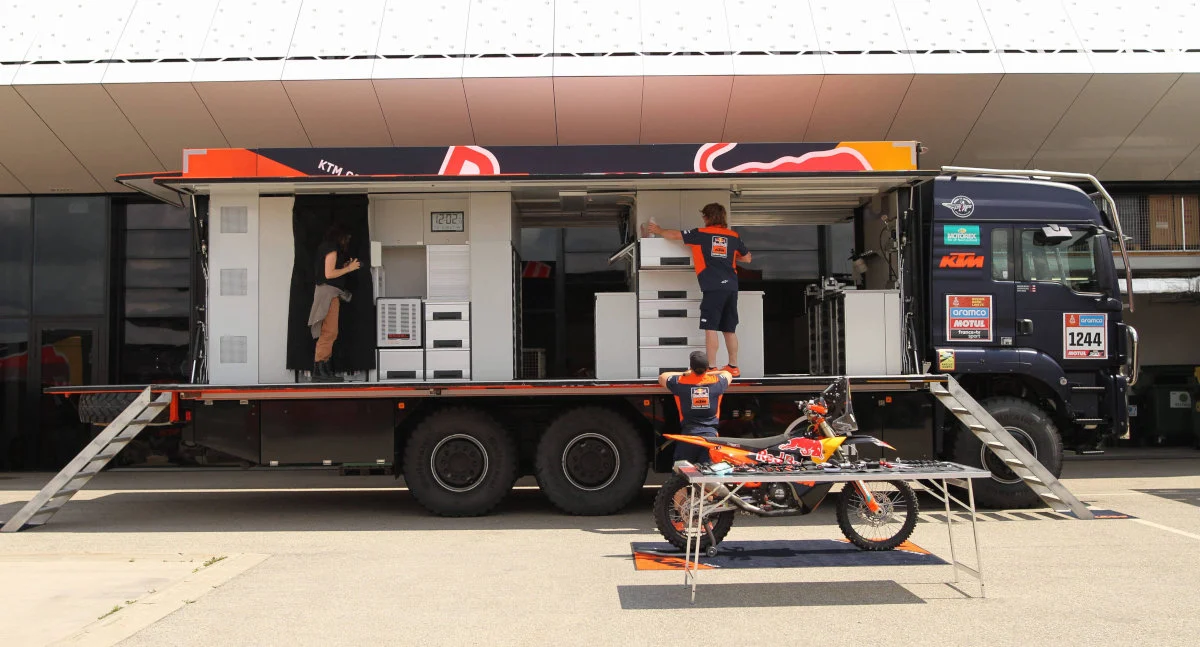

A Mix of Offline-Capable Field Service App and Mobile Warehouse Solution – The KTM Racing Scenario. With Ontego, the technical team documents sales of goods and books them back to headquarters and the leading SAP system with a time delay.
A Mobile Warehouse for KTM Racing Teams
KTM AG, headquartered in Mattighofen (Upper Austria), is Europe's largest motorcycle manufacturer and employs around 3,700 people worldwide. In addition to the series production of motorcycles, the company runs an extensive motorsport program with international operations – for example in MotoGP, Motocross, or at events like the Dakar Rally.
These events also place special demands on material logistics: mobile storage locations on service trucks, high time pressure, and often no online connection to the central SAP system. To overcome these challenges, a mobile solution was developed together with commsult that reliably supports SAP processes in materials management even under offline conditions.
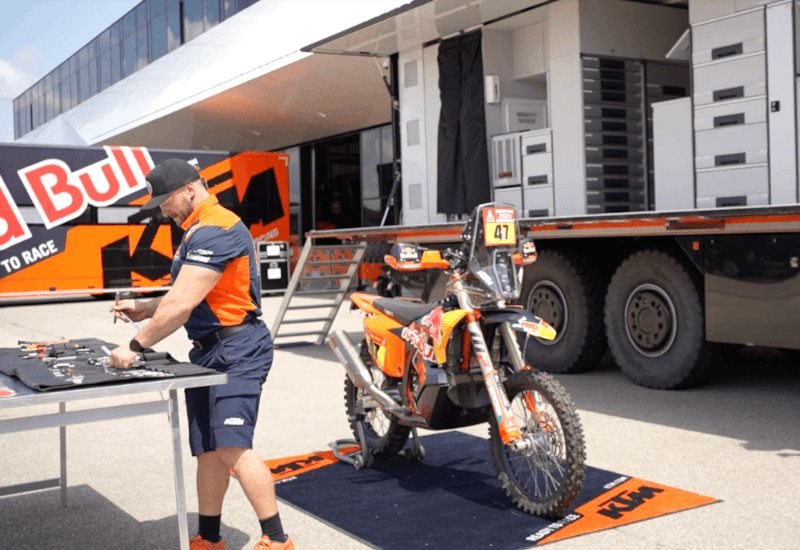
Motorsport Logistics with SAP – A Challenge
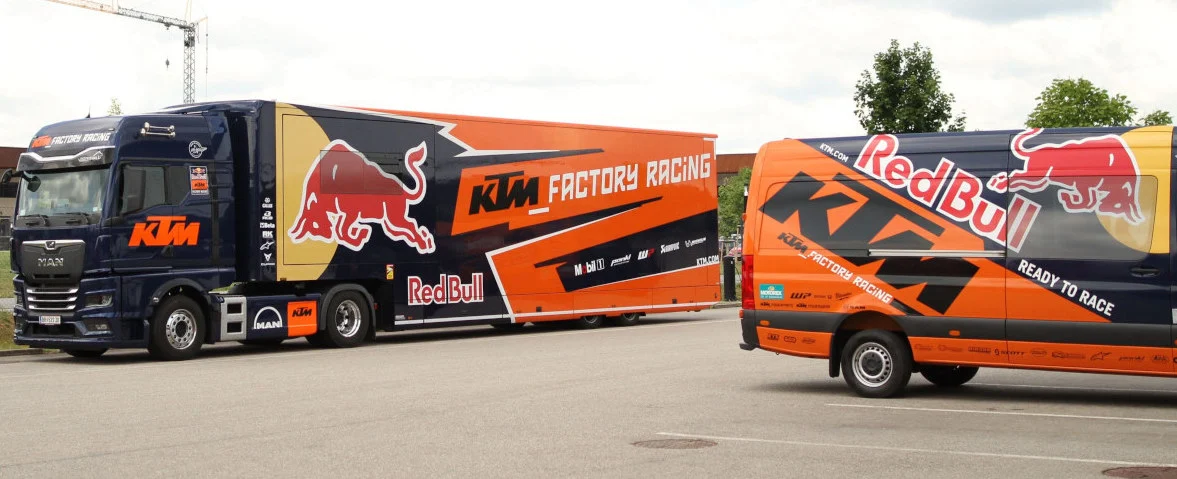
"We travel globally with our race trucks – from MotoGP to Supercross to the Dakar Rally," reports Thomas Klein, responsible for ERP Finance & Logistics and Project Manager at KTM. "In these trucks, we carry around 100 materials, ranging from spare parts to special components." An SAP online connection is often not possible there. At the same time, the corporate level requires the highest possible inventory transparency and the ability to react when stock falls below reporting levels.
Checklist
Check with these 10 points whether your mobile apps already have excellent UX.
A self-developed solution reached its end-of-life stage in 2018. A future-proof solution was sought. Together with commsult, a specific setup was developed – and realized:
- A three-tier architecture model consisting of a local truck server, mobile scanners (Ontego clients), and an HQ server that handles SAP synchronization.
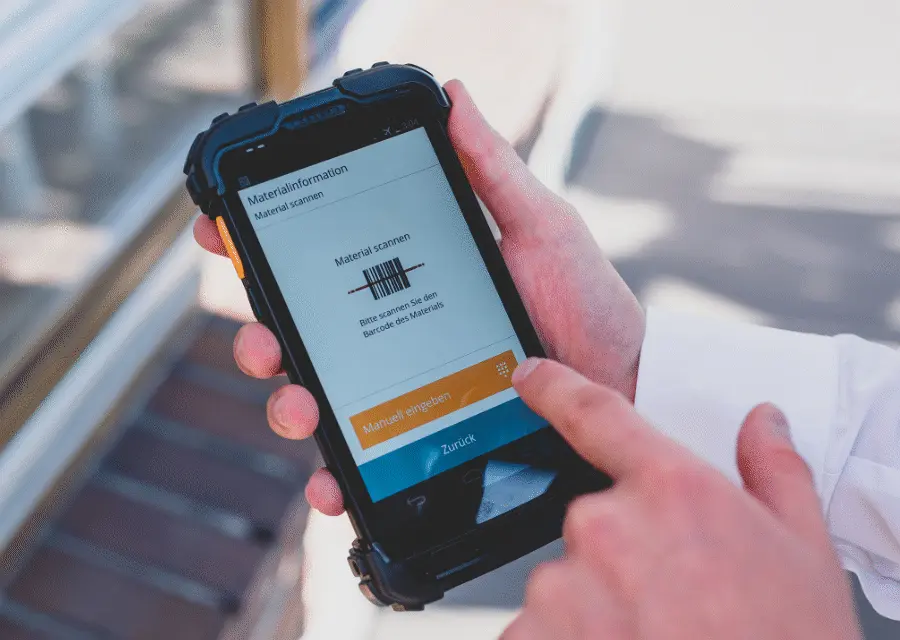
- The mobile app allows all warehouse bookings to be carried out even without an internet connection.
- Only subsequently – for example via the hotel Wi-Fi – does data transmission to the headquarters and from there to SAP take place.
Why a Specialized Solution Instead of SAP?
Fundamentally, SAP is the leading system at KTM. However, standard SAP tools are not optimally accompanying this specific use case. "...however, you need a connection to our network for that, and we couldn't guarantee that, as we are on the road with the trucks in the most diverse regions of the world, where you sometimes have to see if you have internet access at all," Klein describes the practical challenges of the race technicians.
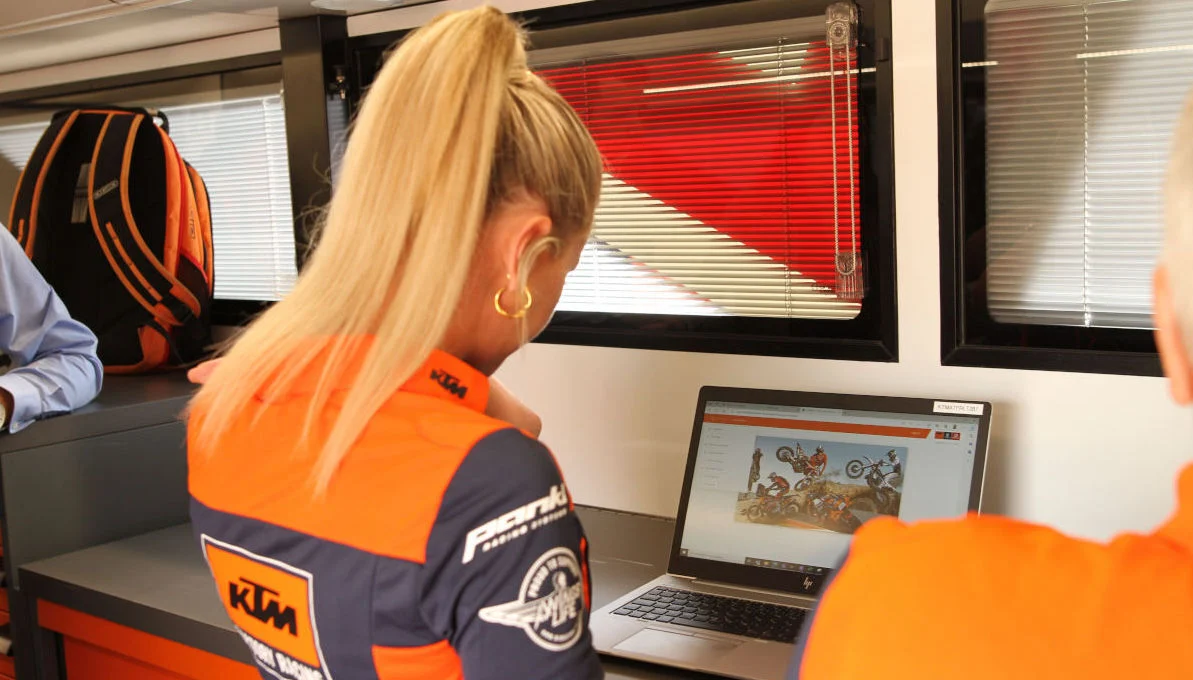
In practice, a local network is set up via laptops in the truck, through which the technicians on-site then book withdrawals via handhelds. A server application initially stores the material movements. The advantage for technicians is obvious:
- Faster material access thanks to mobile inventory information
- Offline bookings on-site in the truck – without detouring through the SAP system
- Transparent tracking for customs and internal evaluations
"The employee always knows exactly where which part is located," explains Klein. "He simply scans the barcode, sees the storage bin – and retrieves the part. No paper chaos, no time-consuming searches."
Warehouse Processes in the Smallest Space in Mobile Use
The mobile SAP app primarily offers classic mobile warehouse bookings. In the field, technicians can perform the following processes, among others:
- Book SAP goods receipt and goods issue
- Document stock transfers between storage bins or trucks
- Record take-backs and returns
- Perform stock corrections
- Count inventory
- Processing of pick lists
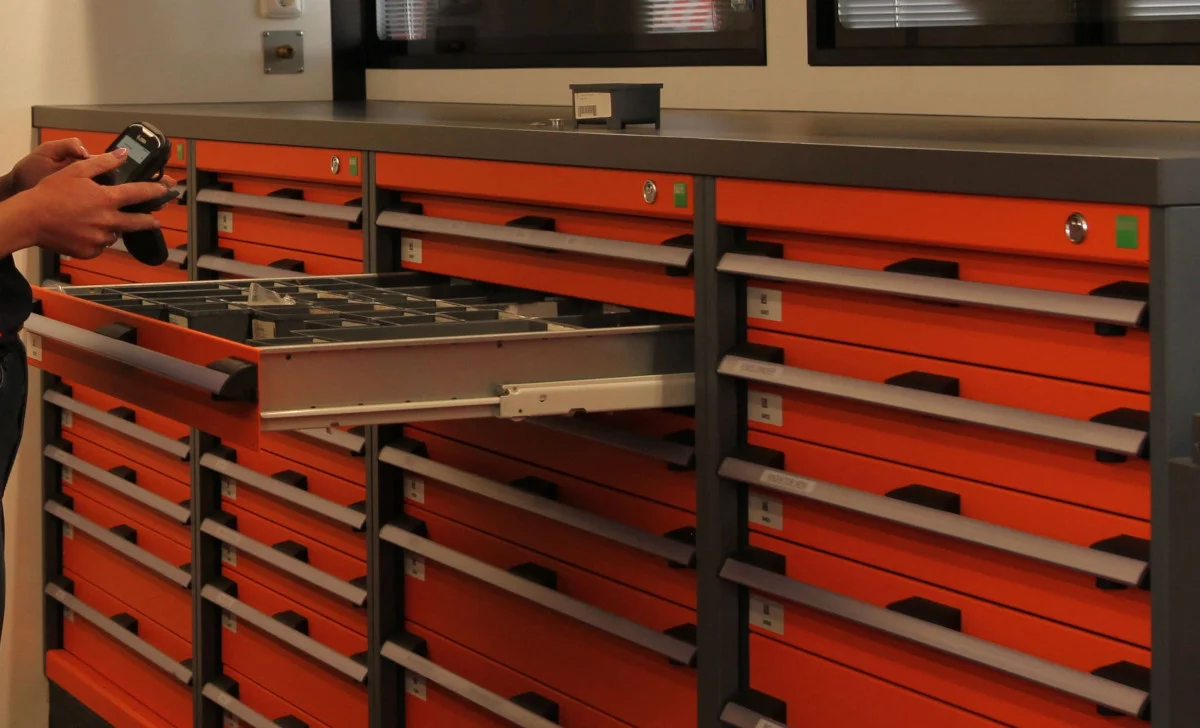
Data entry is intuitive via barcode scanners and a native logistics app. The identification of storage bins and materials is solved uniquely – for instance, through specific barcode logic per truck. The app runs on robust Android devices and is deliberately designed for offline functionality. Synchronizations between the truck server and headquarters take place after a daily closing process.
Flexibility through Offline Processes
A critical capability in the project was the complete offline capability of the solution. Especially at events in remote regions, such as the desert of Abu Dhabi, an internet connection is not a matter of course.
With the Mobile Warehouse solution, the up to 5 employees per truck are able to document all warehouse movements even without a data connection. Data reconciliation towards SAP takes place with a time delay after the races.
Interesting in this context is the two-stage synchronization between the mobile truck servers and the headquarters application, as well as the HQ server and SAP.
Well-Thought-Out SAP Integration
The central SAP interface is anchored at the HQ server. From there, bookings – such as goods issues, stock transfers, or returns – are booked directly into SAP after approval by the responsible employee.
The solution uses standard modules like BAPI_GOODSMVT_CREATE and allows for manual post-processing if required. Incorrect or incomplete bookings are filtered by validation routines. Following a manual check in individual cases, confirmation is sent to SAP.
Do you have questions about mobile solutions?
Carnet ATA & Customs Reports
In addition to inventory management, value was placed on further specific functions with added value during the concept phase, such as the generation of a Carnet ATA for customs clearance. Based on the inventory managed on the server side and material master data on the vehicle, the components carried along can be documented exactly – a must for international transport outside the EU.
A real relief for the employees on the vehicle, according to Klein: "You can print out lists in which exactly what is carried in this truck is noted. This allows the customs officer to check whether you have any material with you that you should not import."
"Historical consumption data" from previous races is also evaluated in the system to generate stocking suggestions for future events.
More Efficient Work under Extreme Conditions
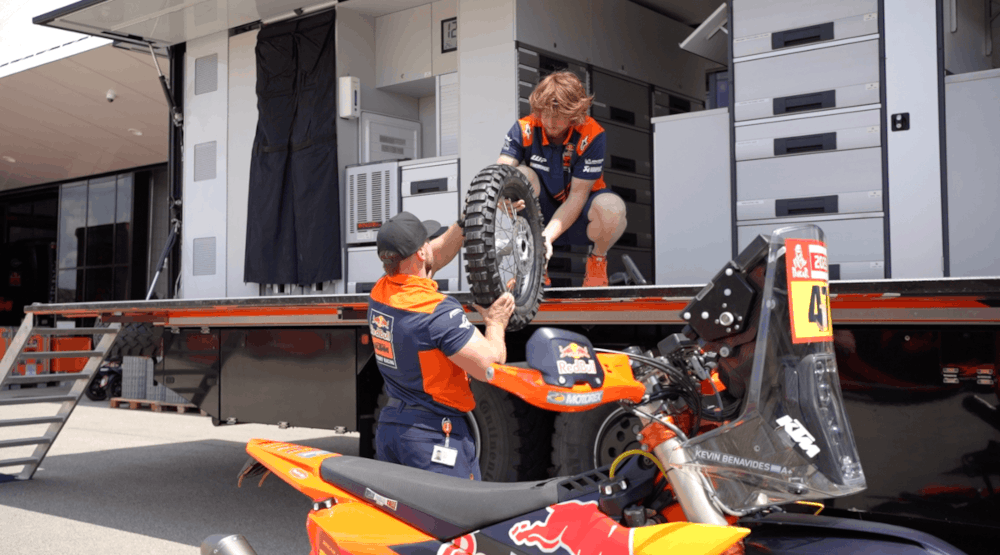
The entire solution allows the teams on-site at the races to work more simply and with more focus. In addition to warehouse management, many of them also take on logistical tasks such as cleaning and loading the trucks – making a pragmatic, reliable solution in inventory management all the more important.
Work is significantly more structured thanks to the Mobile Warehouse solution. And the employees can concentrate on the essentials – namely racing operations.
Conclusion
The KTM case shows: Mobile SAP solutions work particularly well when they are tailored exactly to the use case. Whether in the desert or on the Grand Prix circuit – KTM Racing can rely on its mobile warehouse solution. This was made possible by a specific technical concept consisting of a mobile solution and a server application.

Know-how
Speak to an expert in mobile data capture in SAP logistics.