
SycoTec GmbH & Co. KG, a manufacturer of high-precision milling motors and drive systems based in Leutkirch im Allgäu, has fully digitized its SAP-managed warehouse operations. Using Zebra handheld devices, barcode labels across 7,000 storage locations, and direct SAP WM integration via web services, the company eliminated manual transfer order processes — achieving a measurable reduction in annual process costs.
Get guidance on your SAP warehouse transformation
From Paper Lists to Barcodes: Stock Removal in the SAP WM Warehouse
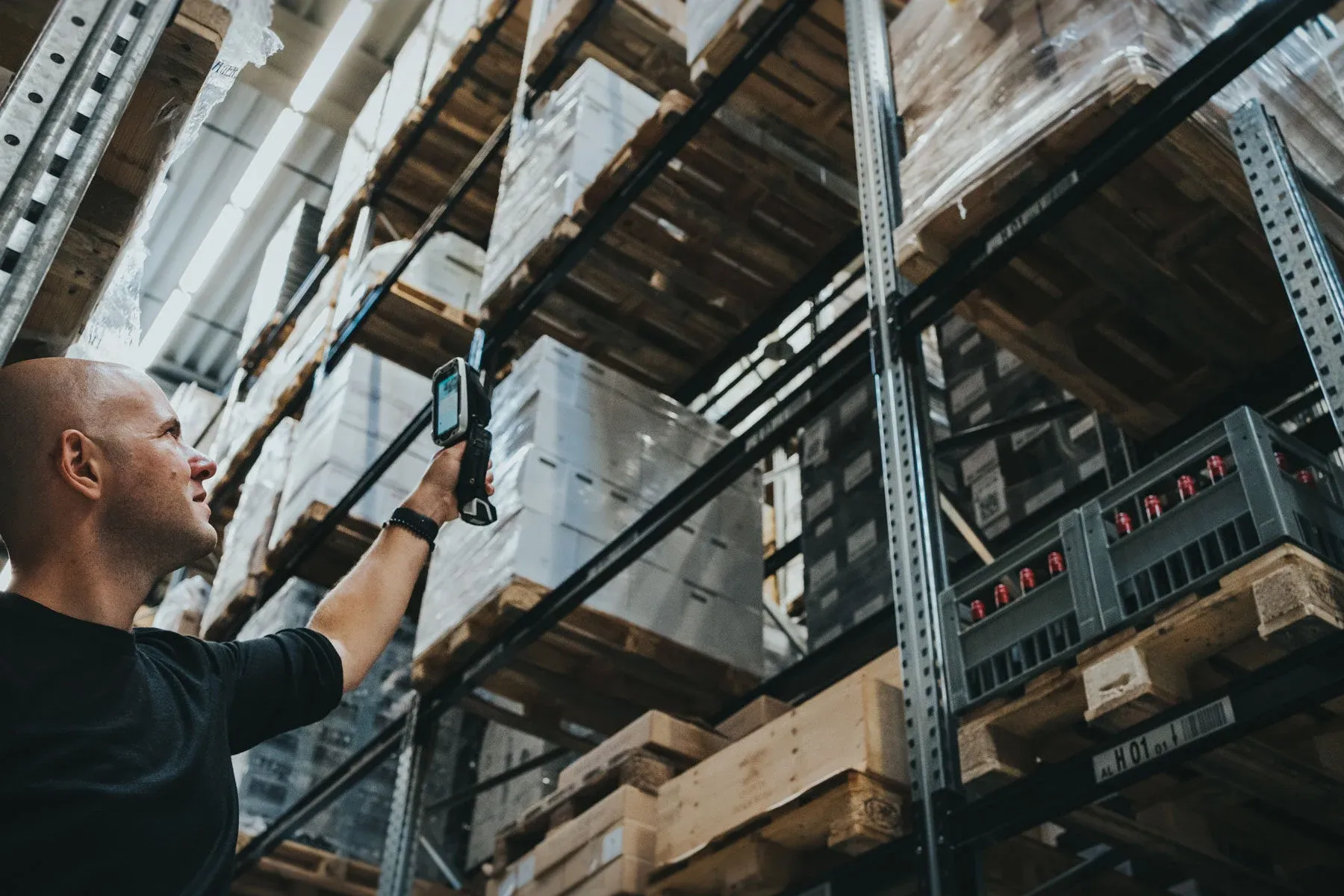
Anyone who has relied on paper in a high-bay warehouse knows the routine: print a transfer order, walk to the storage location with an A4 sheet, pick the material, walk back to the PC, and manually key every material number into SAP. At SycoTec, this walk was long — literally. According to Dennis Müller, Business Applications at the company, and Max Ewae, CIO, the designated PC was roughly 15 metres away from where the actual work happened.
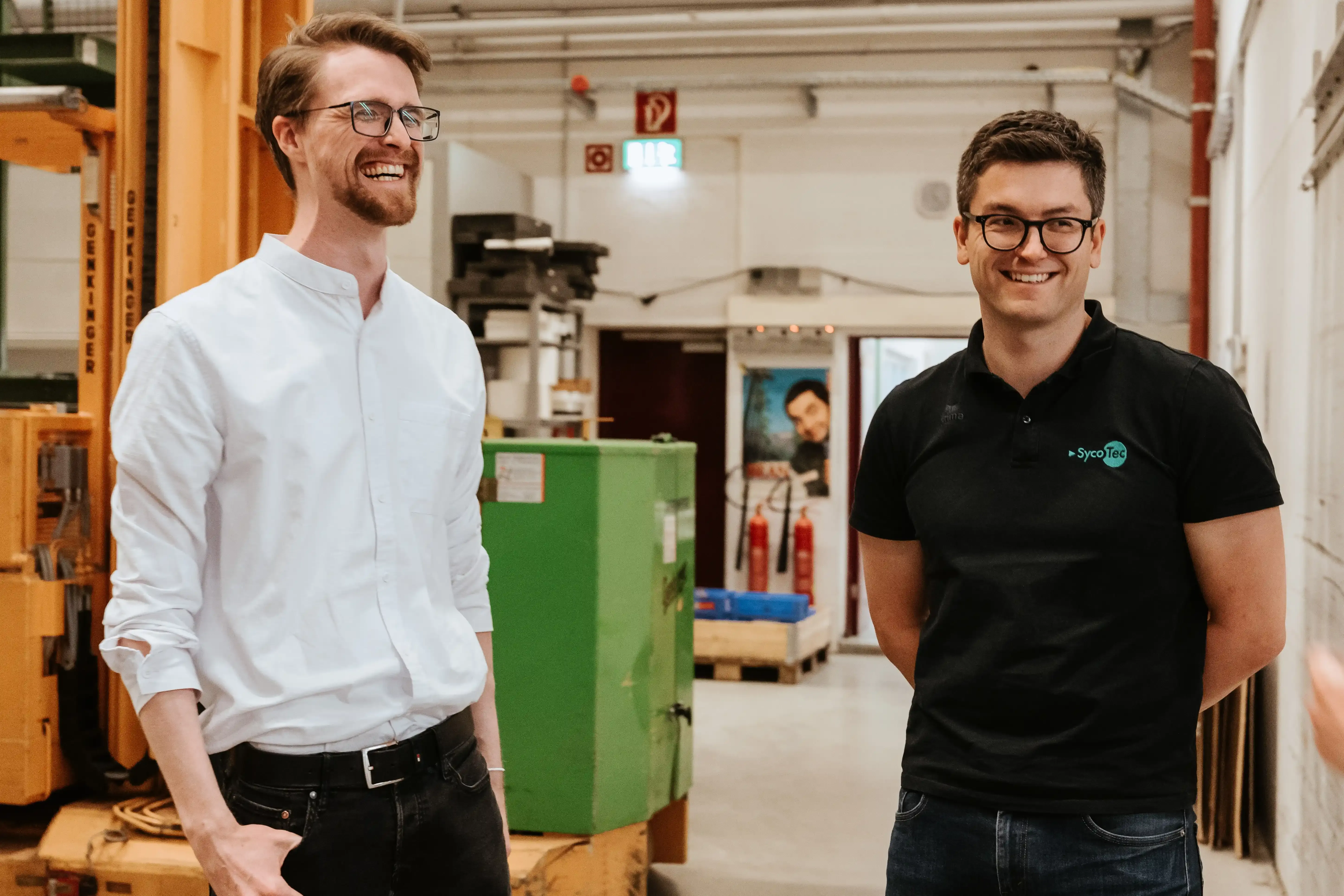
"The warehouse staff would head out with that A4 sheet, drive over to the materials, pick them out, and then manually enter every single material number into SAP."
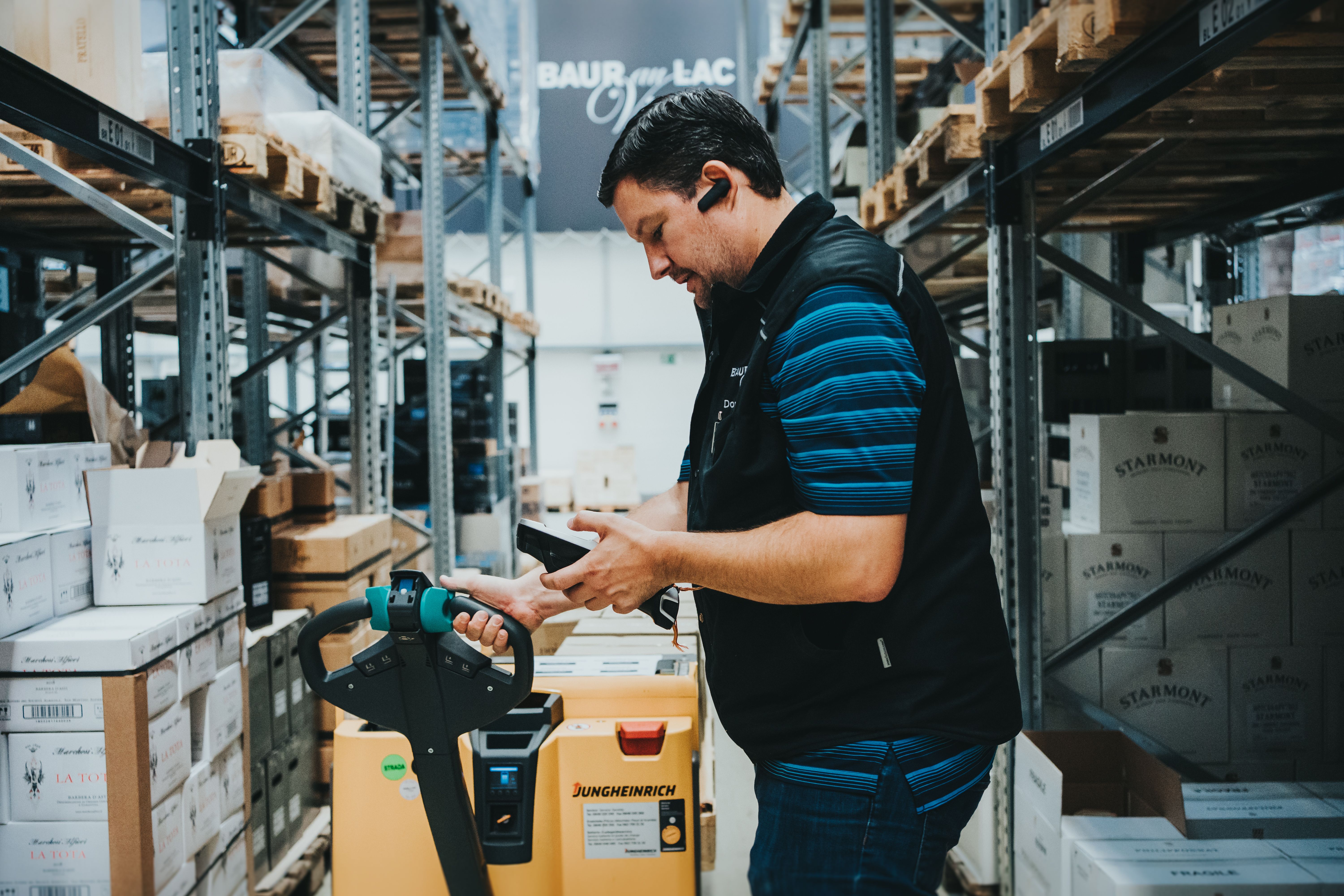
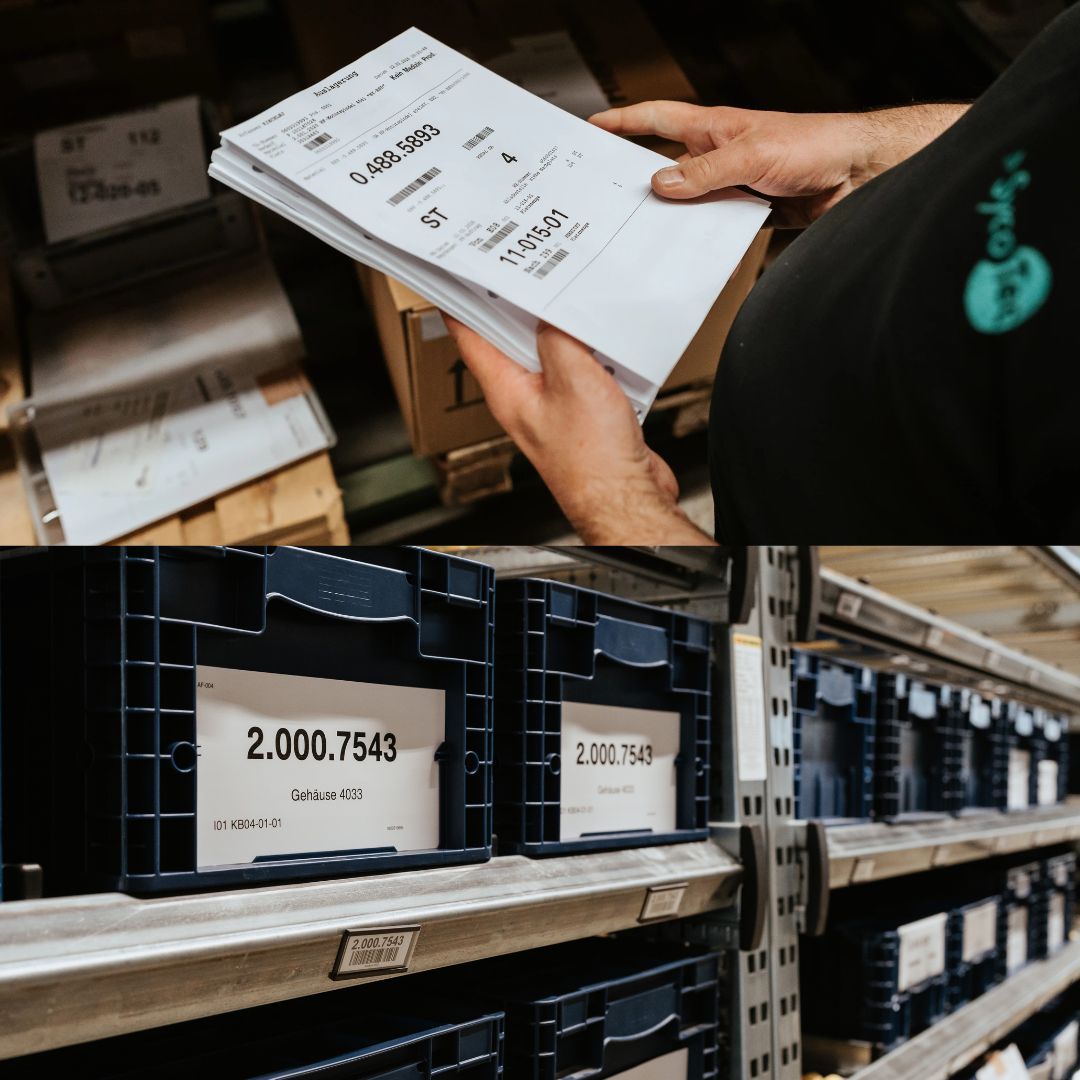
Today, the process runs considerably more efficiently. The SAP WM transfer order still comes off the printer as a printout — but it now carries barcodes. For the warehouse worker, that means: scan the storage location barcode, and the posting happens automatically. Next line item. What previously required multiple trips between the rack and the PC is now handled with a single scan per storage location: Scan & Collect instead of paper-shuffling.
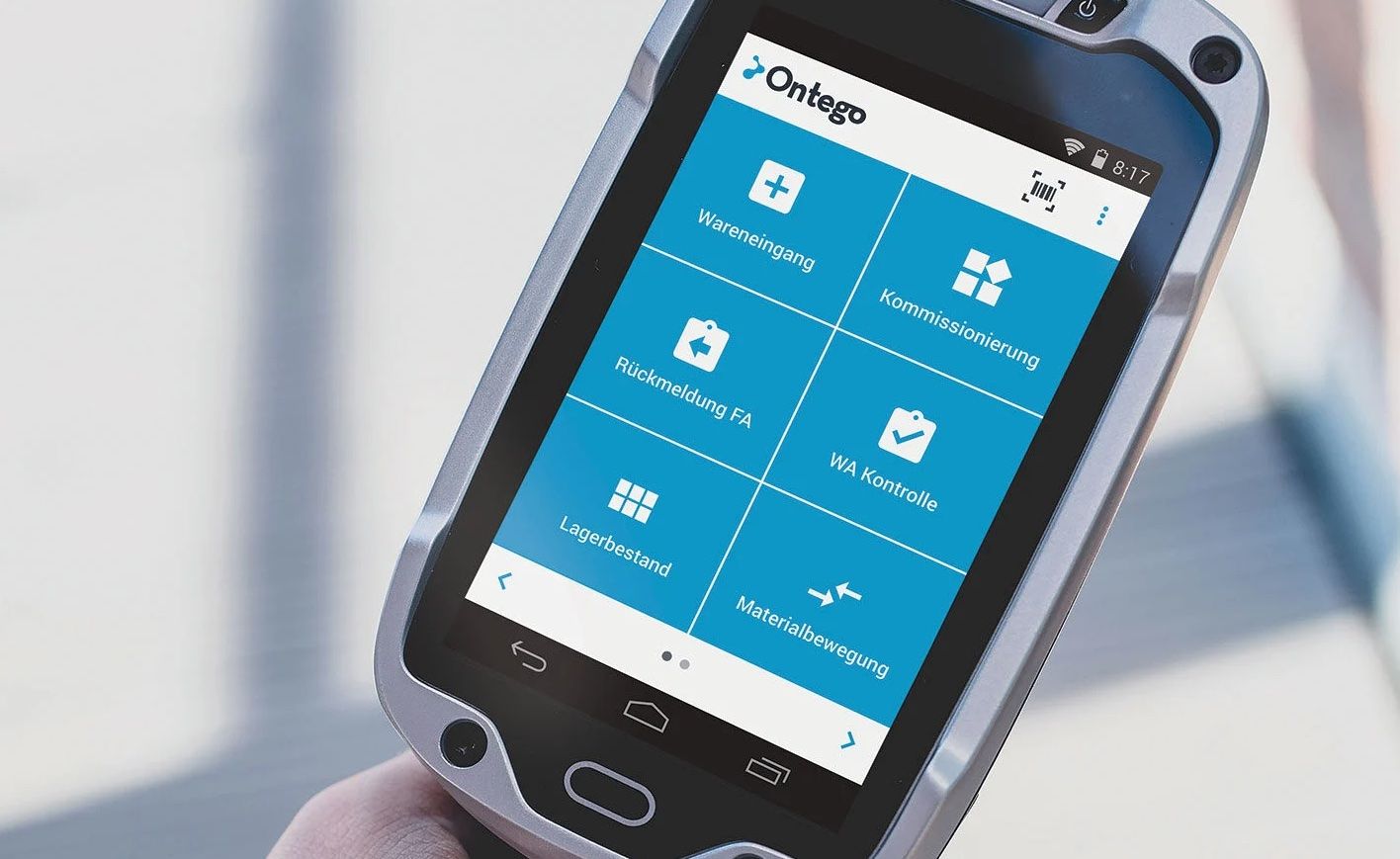
The technical foundation: Zebra handheld devices running the Ontego scanner app, connected directly to the SAP WM system via SAP web services. SycoTec does not need a middleware layer — something that was standard in comparable scenarios in the past. Postings flow back into the system in real time, directly and without any manual handoffs between systems.
7,000 Barcode Labels: The Underestimated Effort in Any Mobile Scanning Project
The core of the project itself — the app rollout — was, according to Dennis Müller, surprisingly straightforward. On the technical side, the effort lay in the SAP web service integration, where the commsult project manager was given direct access to SycoTec's development system and handled the configuration largely independently.
What actually consumed the most time was the physical barcode infrastructure:
- 7,000 storage locations had to be fitted with barcode labels
- In the high-bay warehouse, this meant: two weeks of daily walkthrough sessions, every afternoon, together with a warehouse worker
- Data quality gaps surfaced along the way: storage locations that existed in SAP but could not be physically located
- Barcodes on transfer order forms required form adjustments on the SAP side — which in turn generated unexpected additional effort
"That was probably the single biggest effort in the whole project — labelling every storage location. And just the act of putting up the labels already brought more structure to the warehouse."
His advice to other logistics managers: budget enough time for everything that isn't digital. Barcode labels, form adjustments, and master data maintenance are routinely underestimated — and can significantly delay an otherwise well-planned mobile scanning project.
Mobile Cycle Counting: Paper Out, SAP User In
SycoTec does not carry out a year-end physical inventory count. Instead, they count continuously throughout the year — which makes the value of the mobile inventory solution especially tangible.
Before the scanner solution, the process worked like this: create an inventory document, take the printout along, locate the materials, write down quantities by hand — "barely legibly," by his own admission — return to the office, type everything in, and post. If materials weren't where they were expected to be, it meant additional searching.
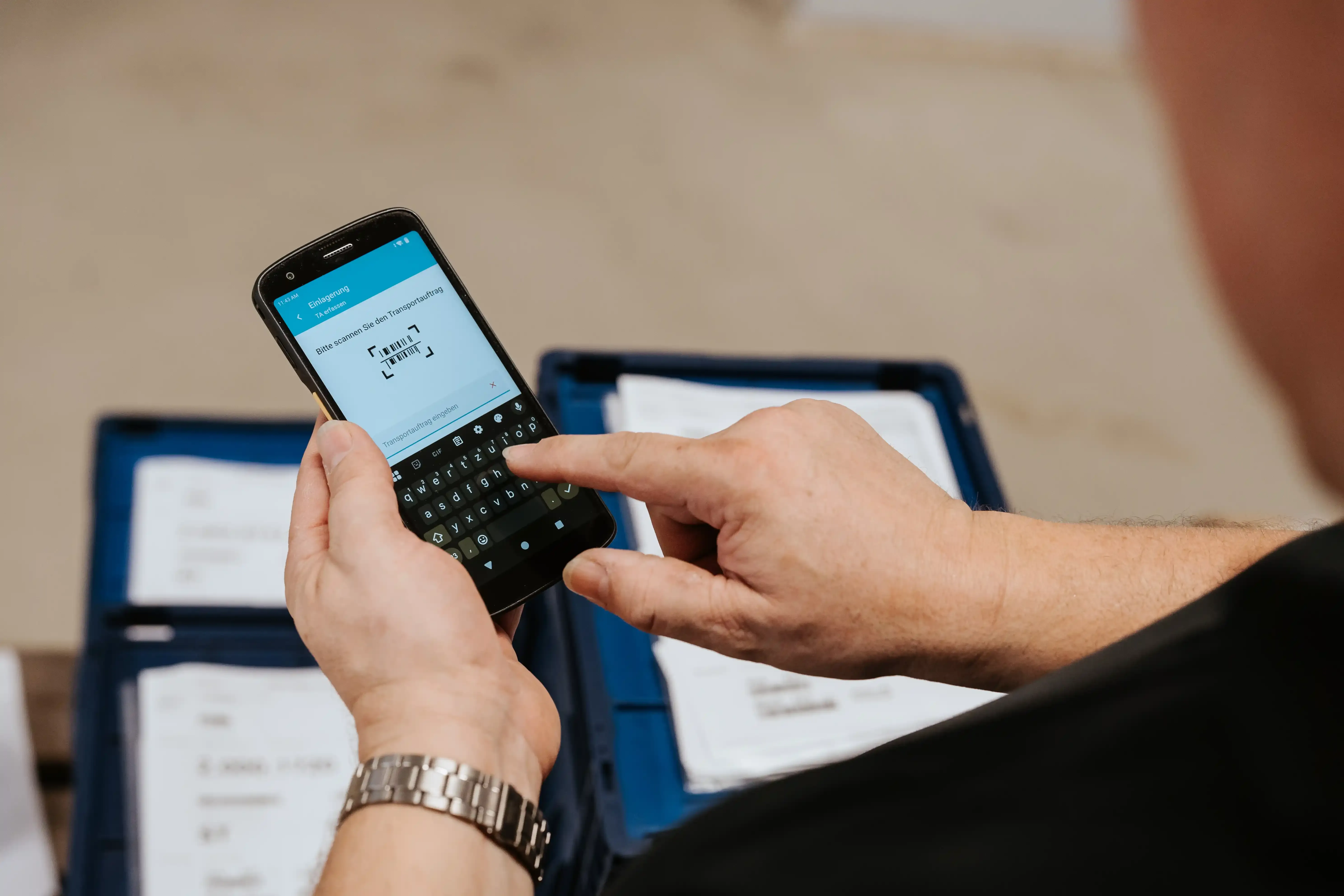
Today, a single scan is enough. Warehouse staff take the inventory printout (now with a barcode), scan the inventory document at the storage location, enter the quantity directly on the Zebra handheld — or confirm a zero quantity with a single key press — and the result is immediately posted in SAP. No downstream data entry, no separate office effort. Direct digital confirmation in the ERP simultaneously reduces the error rates that previously arose from manually transcribing handwritten notes.
Particularly relevant: the audit trail question. In the paper-based world, a handwritten signature documented who had carried out the count. Today, the SAP login handles that.
"For us, digital and mobile SAP processes are no longer just an efficiency topic — they're a control instrument: they eliminate manual error sources, create end-to-end transparency, and enable audit-proof traceability, the foundation for sustainable quality and data-driven decisions."
The mobile inventory solution fulfils the four-eyes principle in a fully digital way — an aspect that is frequently overlooked in practice, and one we examine in detail here.
People Before Technology: Why Human Buy-In Is the Hardest Part of Any Project
The technology worked. What didn't come easily was getting people on board — and that varied significantly from one area to the next.
In part of the organization, the rollout was closely supported by dedicated key users. The project was communicated early, and employees were actively guided through the transition. In other areas, the picture looked different: there, responsibility for the processes lay with people whose day-to-day focus wasn't primarily on these workflows. As a result, the concrete benefit of the new solution wasn't immediately clear to them.
One situation from the project illustrates this challenge well: during a demonstration meant to show the project team why the new solution felt cumbersome, an additional employee was brought in — a step that didn't match the intended usage scenario, meaning two employees ended up handling a task designed for one.
The insight that emerged: the perceived complexity wasn't in the solution itself, but in the attitude toward change. Put differently, "cumbersome" in this case meant "unfamiliar" rather than genuinely inefficient.
Following the completed rollout and targeted support at all levels, the picture today looks different: initial skepticism has largely faded, and the solution is now viewed predominantly positively.
The key takeaway: when introducing systems like this, involving employees early is essential — ideally before the project decision itself is made.
SAP Web Service Integration: Lean, Stable, and Future-Ready
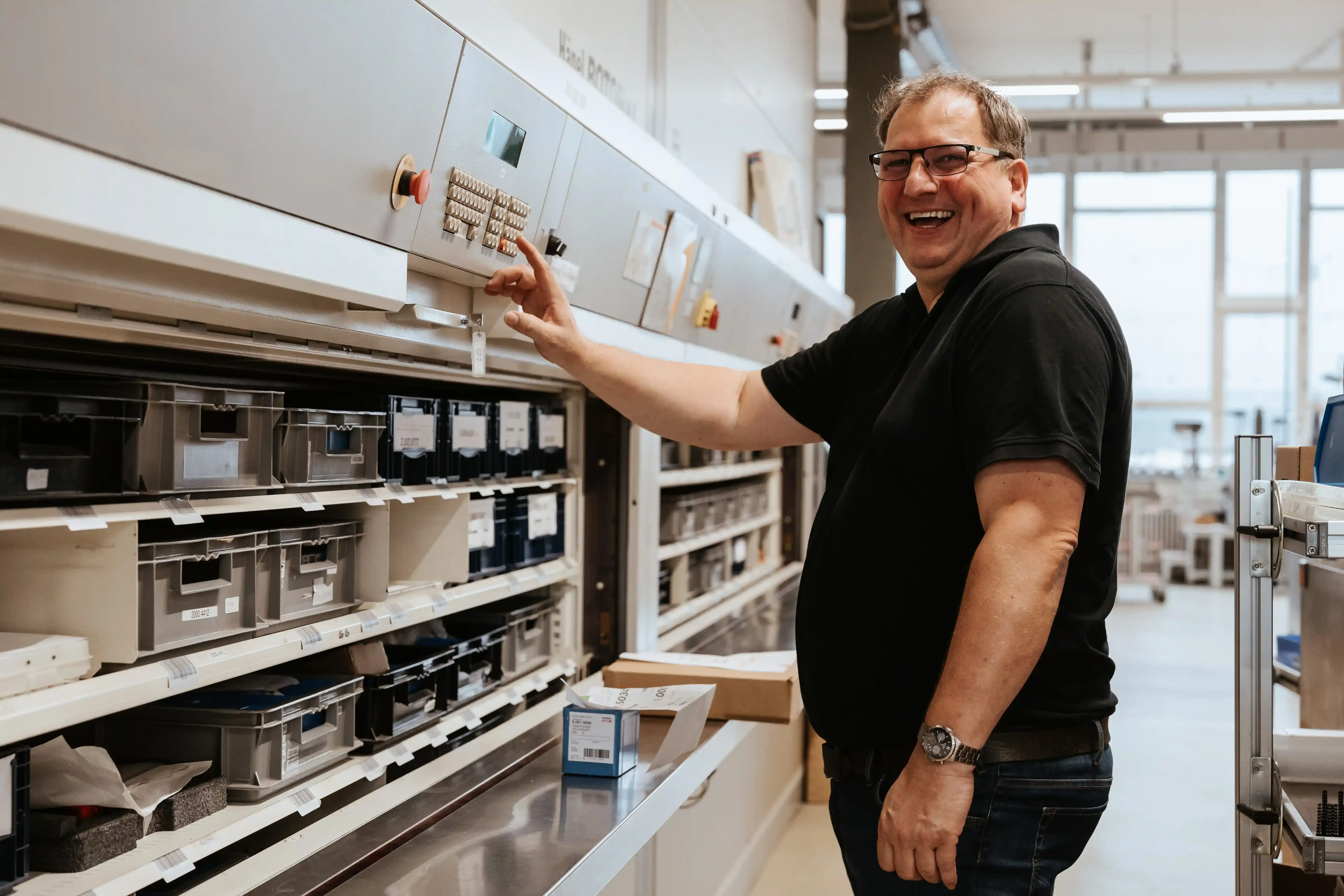
The technical connection between Ontego and SAP at SycoTec was implemented via web services — a proven approach for directly coupling mobile applications with the SAP backend. Dennis Müller, who managed the integration on the SAP side, describes the performance as trouble-free: no noticeable latency, no outages, stable real-time postings.
According to Müller, the question of whether SAP BTP will eventually be added as a central integration hub is a strategic — and somewhat philosophical — decision. For now, the system runs reliably over the direct web service connection.
For future expansion, SycoTec is considering mobile support for goods receipt. A scenario in which AI-assisted delivery note recognition automates the goods receipt posting is also under discussion — the entry point for this would be photographing delivery notes directly with the device camera.
The groundwork is in place: Ontego runs today not only in the high-bay warehouse, but also in primary manufacturing, on the assembly line, and across additional warehouse areas — everywhere with Zebra handhelds and direct SAP postings, as covered in the mobile SAP apps guides.
Conclusion: Reducing Paper in Material Handling as the Foundation for Further Digitalization
With the introduction of Ontego, SycoTec has taken a clear step from paper-based to digital warehouse operations. Stock removals via transfer orders, cycle counting, postings across multiple warehouse areas — everything now runs directly through SAP, directly at the storage location, with no detour via printer and PC.
The investment was manageable: approximately €10,000 as a one-time cost including hardware, and approximately €6,000 in annual running costs. Set against this is an annual process cost saving in the five-figure range — calculated on the basis of an internal time study in the high-bay warehouse that measured travel distances and posting times per transfer order, then extrapolated to annual volumes. Additional warehouse areas are not yet included in this calculation.
What remains is a stable foundation: a mobile SAP solution that works in day-to-day operations, is accepted by staff, and leaves room for the next stage of development — whether goods receipt, AI-assisted delivery note capture, or further process automation.

Know-how
Speak to an expert in mobile data capture in SAP logistics.