

GMS Getränke & Mehr Servicegesellschaft mbH consistently relies on digital processes in warehouse logistics. With a mobile SAP solution and a picking control station, the company increases picking efficiency, reduces error rates, and thus lays the foundation for further growth in beverage wholesaling
Location Structure vs. Uniform SAP Warehouse Logistics
The demands on warehouse logistics in beverage wholesaling (GFGH) are constantly growing. Customers demand punctual deliveries and maximum delivery accuracy. The Krombacher beverage wholesale group GMS reacted early to this development: Instead of paper-based processes, the company introduced a mobile solution that combines SAP integration and modern user guidance.
Do you have questions about mobile solutions?
The GMS Group employs over 700 people at more than 20 specialized beverage wholesale locations. Christian Utsch is responsible for the logistical operations of the wholesale group.
With the introduction of Ontego for the beverage industry and a picking control station incl. SAP integration (read more), the company has the tools at hand to live out uniform processes across all locations. After all: "We have a very heterogeneous location structure with small, medium-sized, and large locations," explains Utsch.
We were looking for a pragmatic solution that we could connect to existing systems. In addition, the application needed to be intuitive for the warehouse team and thus facilitate change management.
In terms of processes, GMS covers three major areas with the warehouse solution:
- Outbound deliveries and associated activities: Picking, transfer to staging areas, checking, and loading
- Goods receipt: Full goods, empties, returns
- Inventory: Cut-off date inventory and ad-hoc stock corrections
Picking Control Station – Interface Between SAP and Warehouse

In beverage wholesaling, picking is a process critical to success. GMS therefore consistently placed the quality of picking at the center of optimization.
"The dispatch department at the respective location transfers all customer orders from SAP to the Ontego picking control station," outlines Tobias Marx, Process Manager Logistics, regarding the method of operation. "There, the warehouse managers visualize the orders, distribute them to the employees, and monitor picking progress in real time."
Via an intuitive planning board, the dispatchers or warehouse managers have the entire picking process in view:
- Automatically prioritizes orders according to delivery date and tour
- Task distribution via drag-and-drop to pickers
- Live status display and escalations
- Monitors live progress and identifies bottlenecks
- Immediate display of shortages
At the largest location, Kreuztal, the teams pick around 23 tours daily, reports Leon Baust, Warehouse Manager of GVS. Warehouse employees receive picking orders in digital form on 10-inch tablets. The orders are pre-sorted—according to the warehouse area in which the employee is working. Ontego handles the splitting of SAP orders. In this way, an employee only sees the orders or order items relevant to them.
The mobile picking process is concluded by printing the pallet slip. To do this, the warehouse employee scans the barcode on one of the printers placed in the warehouse.

50% Time Savings in SAP Inventories
.jpg)
GMS is also making noticeable progress in inventory. Instead of paper-based counting lists, standard double counting, and subsequent SAP bookings, teams now record stocks mobile and in real time.
"Inventory counts take place three times a year—before the season, after the season, and at the end of the year," explains Warehouse Manager Leon Baust. While employees used to search for items in lists during the days of paper-based counts, the counting sequence is now determined by systematically walking through every storage bin and calling up items error-free by scanning the GTIN.
"The Ontego system accumulates all individual quantities for a specific item and reports them to the control station," Baust emphasizes as a further advantage over the paper variant. The dispatcher follows the inventory in real time, recognizes differences early on, and can more easily control any necessary recounts. After approval in the control station, the counting results are collected and automatically reported back to SAP.
The results:
- Lower personnel requirement due to up to 50% faster inventory processing
- Significantly better data quality
- No manual entry of counting results in SAP


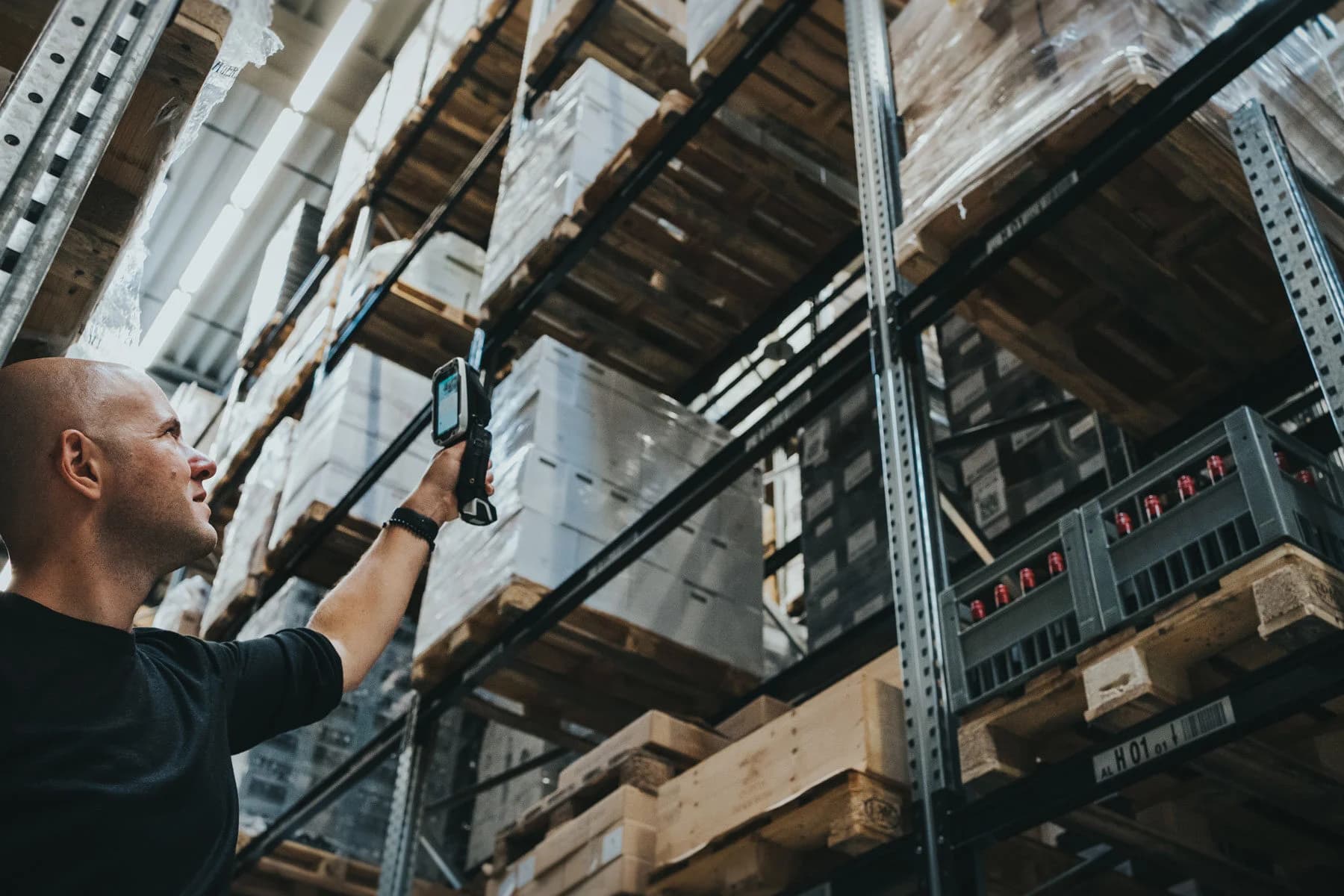
Fig. 1: Block storage of GMS Getränke & Mehr with mobile SAP solution OntegoGL for efficient beverage logistics.
Securing Picking Quality – Preventing Incorrect Deliveries
Quality in picking is critical for success in beverage wholesaling. If an error occurs, in the worst case, it leads to subsequent deliveries or retrievals. This involves considerable additional effort, according to Utsch.
Therefore, there is an internal control process before goods leave the company. In the staging area, teams detect deviations immediately and correct them before the goods are loaded onto the vehicles.
By scanning the pallet slip, a handling unit is identified, including the goods on it. This is checked and counted again before loading. "This certainty that you are scanning the right product and then also packing it is, for me, one of the great advantages that Ontego brings to picking," emphasizes Managing Director Utsch.
With a consistent use of Ontego, we ensure that article mix-ups can no longer occur.
Robust Zebra Tablets, ProGlove Scanners & Printers
Depending on the warehouse area, GMS works with different scanner types. On the forklifts, classic handheld scanner guns are used, which are connected to the tablets via Bluetooth.
In individual picking, employees use back-of-hand scanners from ProGlove—which also communicate with the tablet via Bluetooth. The advantage here: Employees have their hands free and can, for example, grab beverage crates without having to put a scanner aside first. This hardware is more cost-intensive but more efficient, according to Marx's assessment.


Fig. 1: Zebra tablet with Ontego SAP app for digital picking processes at the storage bin at GMS.
Conclusion: GMS Sets Standards for SAP-Guided Warehouse Logistics in Beverage Wholesaling
The Krombacher specialized beverage wholesale group GMS Getränke & Mehr demonstrates how a specialized wholesaler can handle central processes such as picking and inventory in a modern way with a mobile SAP integration. The mobile SAP app offers an intuitive interface that new colleagues understand quickly—an advantage in times of staff shortages and high fluctuation. The picking control station facilitates work for the dispatch department. Both components form a stable starting basis for future growth.

Know-how
Speak to an expert in mobile data capture in SAP logistics.
%20CROP.webp&w=3840&q=75)